Why CC2-Compliant Structural Steel Fabrication Is Becoming the New Standard in 2026 and Beyond
Structural steel fabrication in Australia has undergone a major shift in recent years. Engineers, builders, and regulators are placing far greater emphasis on Construction Categories (CC) — particularly CC2-compliant structural steel fabrication.
But what do these construction categories actually mean?
Why are they more prevalent today?
Are they compulsory if specified by the engineer?
And how will CC2 compliance shape the future of construction?
This article explains everything project managers, builders, and clients need to know.
What Are Construction Categories (CC1, CC2, CC3)?
Construction Categories classify structural steelwork based on risk, complexity, and consequences of failure. They are defined under AS/NZS 5131 – Structural Steelwork – Fabrication and Erection, which works alongside AS 4100 and the National Construction Code (NCC).
CC1 – Low Risk Structure
CC1 applies to simple, low-risk steel structures where failure would have minimal consequences.
Examples include:
Small sheds
Carports
Simple residential steel elements
Compliance requirements are minimal, and formal certification is generally not required.
CC2 – Medium Risk / Regulated Structures
CC2 applies to the majority of commercial, industrial, and public buildings.
Examples include:
Commercial buildings
Warehouses
Retail centres
Multi-unit residential buildings
Public infrastructure components
CC2 introduces mandatory quality management systems, traceability, inspection, and certification.
This is where most regulatory focus is now directed.
CC3 – High Risk / Critical Structures
CC3 applies to structures where failure could result in significant loss of life or major economic impact.
Examples include:
Hospitals
Major bridges
Large public venues
Critical infrastructure
CC3 requires extensive third-party oversight, advanced testing, and the highest level of documentation.
Why Construction Categories Are More Prevalent in 2026
Construction Categories are not new — but enforcement and awareness have increased significantly.
Key reasons include:
Higher regulatory scrutiny from building authorities
Increased focus on public safety
Past structural failures highlighting fabrication risks
Greater accountability placed on engineers and certifiers
Clearer alignment between the NCC and Australian Standards
In 2026, engineers are expected to actively nominate construction categories, not assume compliance.
Are Construction Categories Compulsory If Noted on Engineer Drawings?
Yes.
If an engineer specifies “CC2-compliant structural steel fabrication” on drawings or specifications:
It becomes a mandatory contractual requirement
The steel must be fabricated by a CC2-certified fabrication facility
Certification and documentation must be supplied
Non-compliant fabrication can result in:
Rejected steelwork
Costly re-fabrication
Project delays
Insurance and certification issues
Is CC2-Compliant Structural Steel More Costly
Yes — but for valid reasons.
CC2 fabrication typically costs more than non-certified steel because it includes:
Certified Quality Management Systems
Material traceability
Qualified welders
Documented welding procedures
Inspection and testing
Compliance certification
However, the cost increase is usually small compared to the overall project value, and it significantly reduces:
Structural risk
Rectification costs
Legal exposure
Delays during certification
In many cases, CC2 compliance saves money over the life of the project.
Why Are Engineers Requesting CC2 Compliance?
Engineers are legally responsible for structural performance.
By specifying CC2:
They ensure fabrication aligns with Australian Standards
They reduce professional liability
They provide clarity to builders and certifiers
They protect occupants and asset owners
In short, CC2 protects everyone involved — not just the engineer.
Will More Structures Be Required to Be CC2-Compliant?
Yes.
The industry trend is clear:
Most commercial and industrial projects are now CC2 by default
Councils and certifiers increasingly expect CC2 compliance
Insurance providers favour compliant fabrication
Engineers are specifying CC2 more frequently
CC2 is rapidly becoming the baseline standard, not the exception.
Will Structural Steel Fabricators Need to Be Certified?
Yes.
To fabricate CC2-compliant steel, a fabricator must:
Be independently certified to AS/NZS 5131 for CC2
Maintain an audited Quality Management System
Employ qualified welders
Use approved welding procedures
Maintain full material traceability
Not all fabricators meet these requirements.
Can Any Structural Steel Fabricator Do CC2-Compliant Work?
No.
Only fabricators with:
Current CC2 certification
Independent third-party audits
Proper documentation systems
can legally supply CC2-compliant structural steel.
Using a non-certified fabricator — even unintentionally — can invalidate compliance.
What Testing Is Involved in CC2 Compliance?
CC2 fabrication typically includes:
Material certification (mill certificates)
Welding Procedure Qualification Records (WPQR)
Welder qualification testing
Visual weld inspections
Non-Destructive Testing (NDT) where specified
Dimensional checks
Final compliance documentation
All testing must be recorded and traceable.
How Can You Check If Structural Steel Is CC2-Compliant?
Always ask for:
Fabricator’s CC2 certification
AS/NZS 5131 compliance documentation
Material traceability records
Welding qualifications
Inspection and test reports
Final compliance certificates
If documentation cannot be supplied, the steel is not compliant.
How CC2-Compliant Structural Steel Fabrication Protects the Future of Construction
CC2 compliance delivers:
Safer buildings
Reduced structural failures
Higher construction quality
Clear accountability
Greater confidence for clients and certifiers
As construction becomes more regulated, compliance is no longer optional — it is essential.
CC2 Structural Steel Fabrication and Austeel Australia
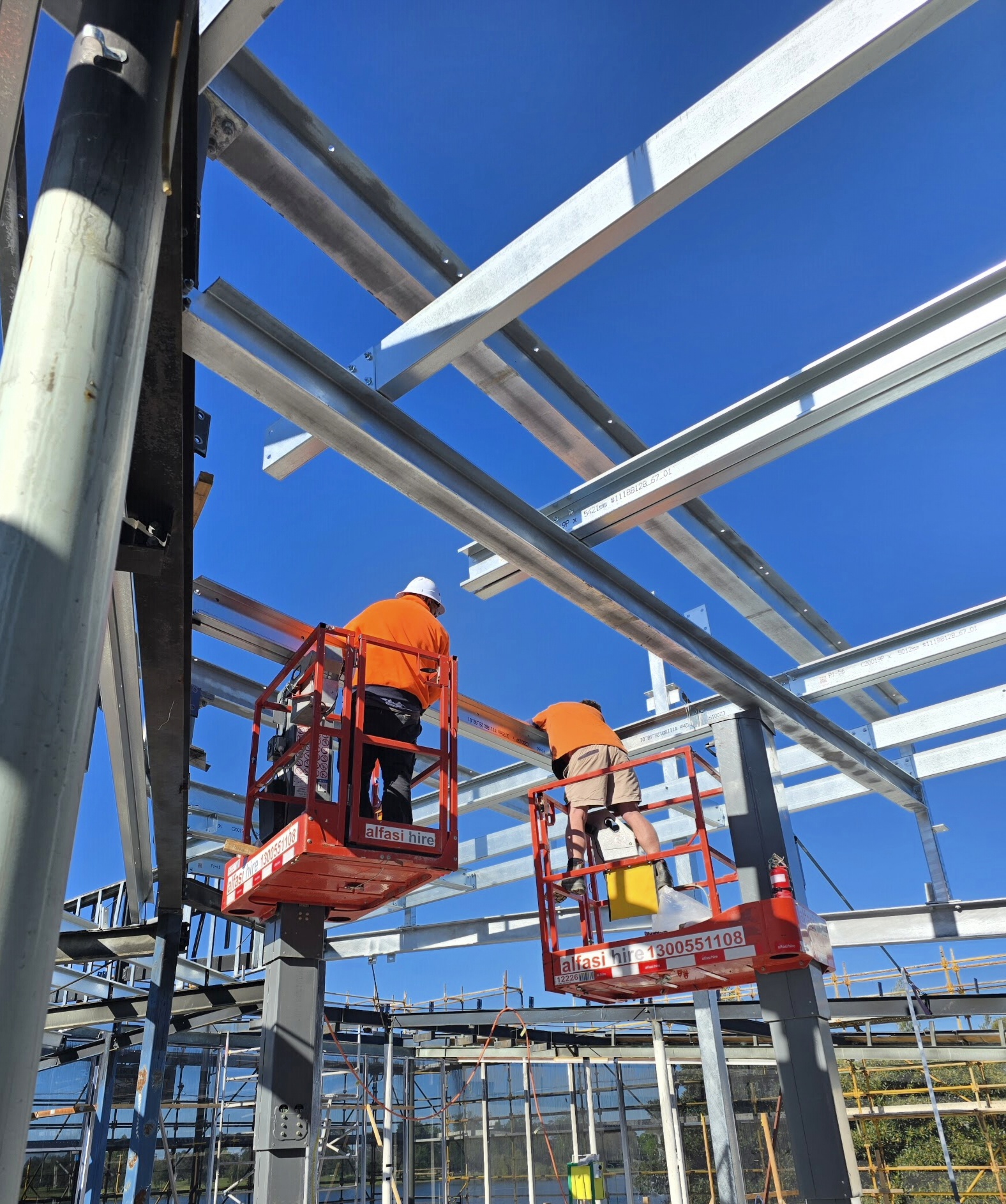
With over 31 years of experience in structural steel installation, Austeel Australia understands the importance of compliance.
For CC2 projects, Austeel Australia works exclusively with accredited CC2 fabrication partners, ensuring:
Fully compliant structural steel
Proper certification
Confidence for engineers, builders, and clients
This approach allows projects to meet regulatory requirements without compromise.
Final Thoughts
CC2-compliant structural steel fabrication is not a trend — it is the future of construction in Australia.
Understanding the differences between construction categories, recognising when compliance is compulsory, and selecting certified fabrication partners will protect:
Your project
Your investment
Your reputation
If CC2 is noted on the drawings, it matters.